Nova Clean · Greater Glasgow
Façade cleaning for Glasgow sandstone, render and cladding
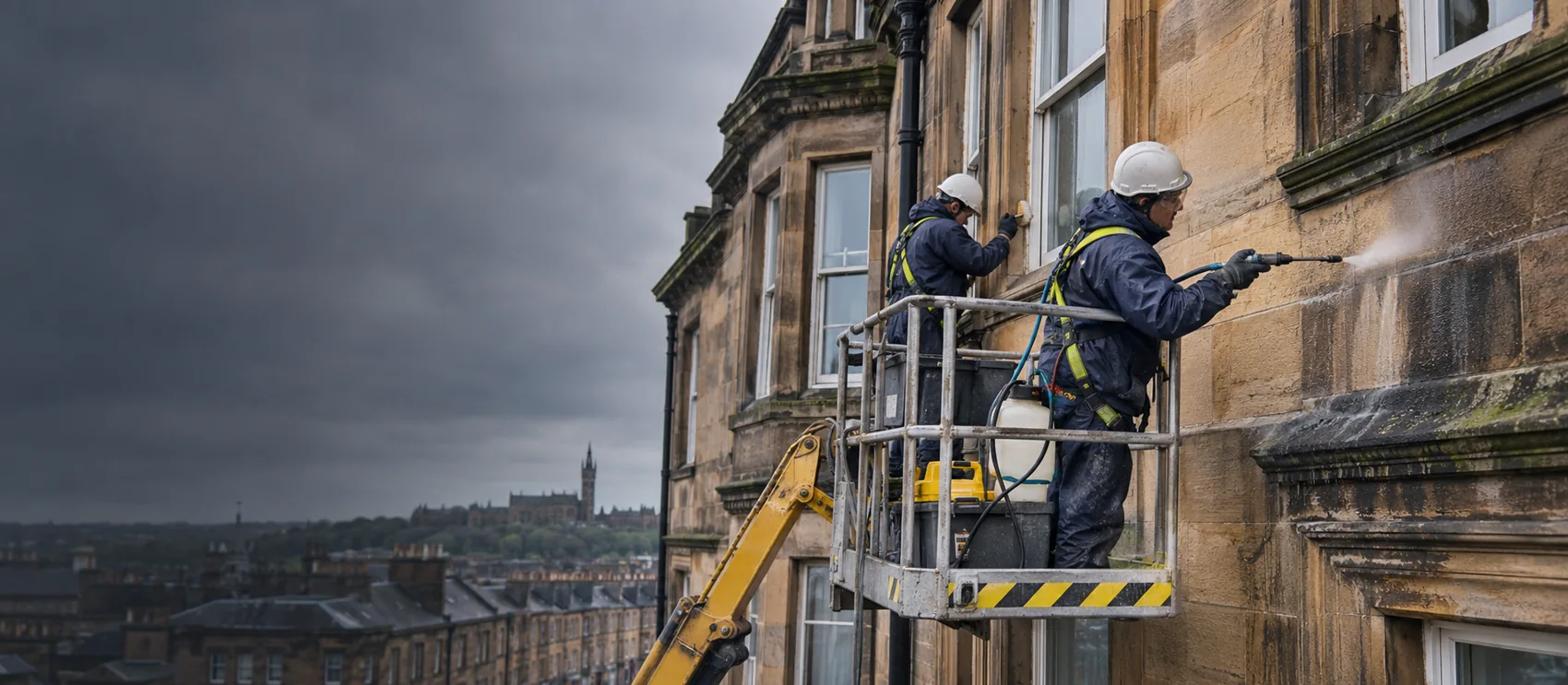
Measured cleaning for sandstone, render and cladding with access and water carefully controlled.
Request a quoteSurveying Glasgow façades and choosing a test area
On a Glasgow sandstone frontage, the colour visible beneath a sill can tell a different story from the exposed stone beside it. Before quoting we ask which elevation needs attention, what the wall is made of and whether you are dealing with traffic film, algae, paint residue or a history of water running down the face. For rendered or clad buildings, photographs of joints and previous repairs help us decide where an initial trial will be most informative.
Sandstone and the value of restraint
Glasgow sandstone gives many streets their character, but it can be vulnerable when weathered joints and soft areas are exposed. An aggressive jet or abrasive process may remove part of the stone surface along with the dirt. We examine the face, mortar, carved details and any patch repair before proposing a method. Low pressure water, controlled hand work or another specialist technique may be considered according to the condition and the deposit. A test area shows how much change is possible and whether colour variation will remain. The aim is not to force every block to a uniform shade. Natural weathering and past repairs are part of the facade’s history, and cleaning cannot recreate lost stone.
Render, painted surfaces and modern cladding
Painted render may be stained by algae, traffic film or runoff from a failing gutter. It may also have flaking coating or a hollow area that cleaning would worsen. We distinguish sound washable material from a section that should be repaired or repainted. Composite panels and metal cladding have coatings, seals and joints that call for compatible products and controlled contact. We do not assume that a strong cleaner suitable for masonry can be used on aluminium, glass or plastic trim. A sample area and manufacturer guidance may shape the specification. Careful rinsing and protection of adjacent surfaces help preserve the finish while improving the appearance.
Agreeing a test patch on the façade
Choose a discreet patch that represents the wall to be cleaned. On a sandstone frontage, an area of recent pointing can respond differently from the original stone beside it, so both may need a trial. Agree where the treatment stops and leave an adjacent strip untouched for comparison. Once the patch is dry, view it from pavement level in ordinary daylight. Record the finish you are happy with and any staining you accept will remain. That gives the owner, factor and contractor a common reference before they agree to treat a whole elevation.
Heritage character and existing repairs
Older buildings may contain original stone, later replacement blocks, patched mortar and coatings from different periods. These differences can become more visible after cleaning, even when the method is appropriate. We identify fragile details and discuss whether a conservation professional or stone specialist should advise before work on a significant facade. Cleaning does not reverse erosion or replace failed mortar. Where a surface is particularly delicate, a gentle trial or deferral may be the responsible answer. Owners need to understand the expected appearance and any remaining colour variation. We record the agreed method and limits rather than treating heritage fabric as a generic washable wall.
Dealing with soot, traffic film and biological growth
Urban facades gather particulate pollution and runoff marks in sheltered details. The darker band beneath a cornice may have a different cause from green growth on a shaded rear wall. We assess the pattern of staining because it can reveal a leaking downpipe or defective drip detail. Cleaning a facade while that cause continues may offer only a short-lived result. A controlled sequence starts with the least disruptive suitable method and protects windows, metalwork and planted areas. Where soot follows a fire, the origin and condition of the building may require a separate damage assessment. We explain when the work is surface cleaning and when another contractor should investigate the underlying issue.
Algae and biological growth in a wet climate
Shaded walls near gardens, riverside settings and surfaces exposed to frequent rain may support algae, lichen or moss. A north facing render wall in Milngavie can remain damp longer than an exposed elevation. We first consider whether overflowing gutters, blocked drainage or vegetation are increasing moisture. Removing growth without addressing a persistent water problem may lead to early return. A product, if used, is selected for the surface and applied within its instructions, with surrounding plants and runoff protected. We do not promise that a treatment permanently prevents regrowth. The client receives realistic advice on maintenance and signs of damp that warrant further building investigation.
Access, water control and adjoining properties
A facade on a narrow street in Finnieston, a tenement above a retail pavement or a detached building in Bearsden each presents different access constraints. We plan how equipment, barriers and people move before selecting a cleaning date. A scaffold, platform or reach system may be needed, depending on height and the work. The owner or manager must clarify permissions for a public pavement, shared close or neighbouring yard where relevant. Entrances, busier footfall, deliveries and parked vehicles influence the working window. A technician should not lean from an unsuitable window or climb an unsafe ladder simply to reach an isolated mark. Safe access is a defined cost and part of a practical quotation.
Windows, seals, signs and neighbouring materials
A facade is not one uninterrupted material. Glazing, window frames, signs, external lights, vents, cables, render patches and stone details all meet the cleaning area. We map these junctions and protect sensitive components before work. High pressure water can be driven through a weak seal or open joint, so the route and intensity of rinsing matter. We ask whether any equipment can be isolated by an authorised person, and we avoid making changes to an unknown service. A shopfront may need a temporary barrier and an agreed opening time. The quotation should say whether windows and signage receive a final clean or are only protected from overspray.
Water control and protection below the wall
The material removed from a facade has to go somewhere. We plan the flow of water, dissolved dirt and loose growth so it does not enter an open doorway, cellar lightwell or neighbouring property. Drains, planted areas, paths and public surfaces may need temporary protection. A rear tenement court can be enclosed and hard to reach, while a commercial frontage may have continuous pedestrian traffic. We discuss a collection or containment strategy appropriate to the task. The team also checks the ground at the end so the building is not left with slurry on steps or a slippery path. A clean wall should not create an avoidable problem below it.
A recurring streak beneath an eave can warrant a look at the roof drainage before the wall is washed again. Coordinate any roof cleaning with work below and identify balconies or terraces that need separate protection or cleaning.
Shared buildings and factors
A Glasgow factor may be coordinating several owners, tenants and businesses in one block. We can help define a scope by elevation, floor level and material so that the parties know what is included. The factor can clarify who authorises access, whether rear courts are shared and which windows may need notice. A trial area may be useful before a collective decision is made. We separate cleaning from repointing, stone repair, gutter work and repainting so that the project can be sequenced properly. A realistic working plan considers noise, water, opening hours and privacy. The handover can document treated areas and visible defects for future maintenance discussion.
Commercial frontages and public perception
A business entrance is often cleaned because staining affects presentation, but the operational plan matters as much as appearance. We discuss when customers arrive, where deliveries occur and whether a temporary route is available. A hotel in the city centre, a retail unit in Paisley and an office in Clydebank may each need a different work window. The surface beneath a sign or canopy can be difficult to reach without disturbing fixtures, so we agree the boundary. We avoid promising a pristine uniform finish on an aged facade. A documented trial and an itemised quotation allow the business to decide whether a limited frontage clean or full elevation is appropriate.
Quoting for the work and agreeing the finish
The quotation should identify elevations, approximate area, substrate, deposit type, proposed access, test requirements, water and power arrangements, protection and waste handling. It should distinguish low level frontage work from high level masonry or awkward rear elevations. The cost may be driven by scaffold, platform hire or pavement management more than by square metres. We explain whether glazing, signs, gutters, graffiti removal, repointing and protective treatments are included or excluded. An unexpected defect discovered during a trial is discussed before the scope changes. A clear price and method help the owner compare practical outcomes rather than vague claims about a total restoration.
The sequence from survey to handover
The team confirms the material, test result and access conditions before setting barriers and protection. Cleaning proceeds in controlled sections so runoff and overspray can be managed. We inspect the result as it develops, paying attention to joints, window edges and changes in stone or coating. Where a section responds differently, the method is reviewed rather than forced. At the end, surrounding paths and adjacent surfaces are checked and the client receives a record of treated areas, remaining stains and observed defects. A facade can still need drying time before its final colour is judged. A clean is not a guarantee against later water ingress or new atmospheric staining.
When repair must come first
A leaking gutter, open joint, detached render, unstable stone or active water ingress can make cleaning unsuitable until repair. We do not use water or equipment to conceal a structural condition. An engineer, roofer, mason or other competent trade may need to investigate. The cleaner can describe visible concerns and pause the affected section, but should not claim to certify the wall from a surface inspection. Once the cause is repaired, a cleaning test can establish what staining remains. This order often saves the owner from paying twice for the same facade. It also protects neighbours and occupants from avoidable water penetration during work.
Maintenance after a careful clean
The frequency of future attention depends on the facade’s exposure, drainage and material. A rear wall under trees may collect growth quickly, while a sheltered stone detail can retain urban deposits. We advise the owner to watch for recurring streaks beneath a gutter, staining around a window and any new crack or open joint. Those signs may call for repair rather than another wash. A record of the cleaned elevations and test results helps the next contractor use a compatible method. We avoid a fixed annual promise for every Glasgow building. The useful maintenance interval comes from the actual wall, its water management and the way the finish changes over time.
Façade cleaning across Greater Glasgow
We discuss facade cleaning in Glasgow, Paisley, Bearsden, Clydebank, Newton Mearns, Milngavie, Renfrew, Greenock and wider parts of West Dunbartonshire, East Dunbartonshire, Renfrewshire, East Renfrewshire and Inverclyde. Tell us the address, wall material if known, approximate height, staining pattern and access restrictions. Photographs from street or ground level are useful. Please do not climb to inspect the facade. A city centre sandstone frontage and a low render wall in a suburban garden need very different plans. We will explain whether a survey or test area is advisable before a firm specification.
Discuss the building with Nova Clean Glasgow
Call 0845 52 805 20 or email