Nova Clean · Greater Glasgow
Commercial kitchen deep cleaning in Glasgow
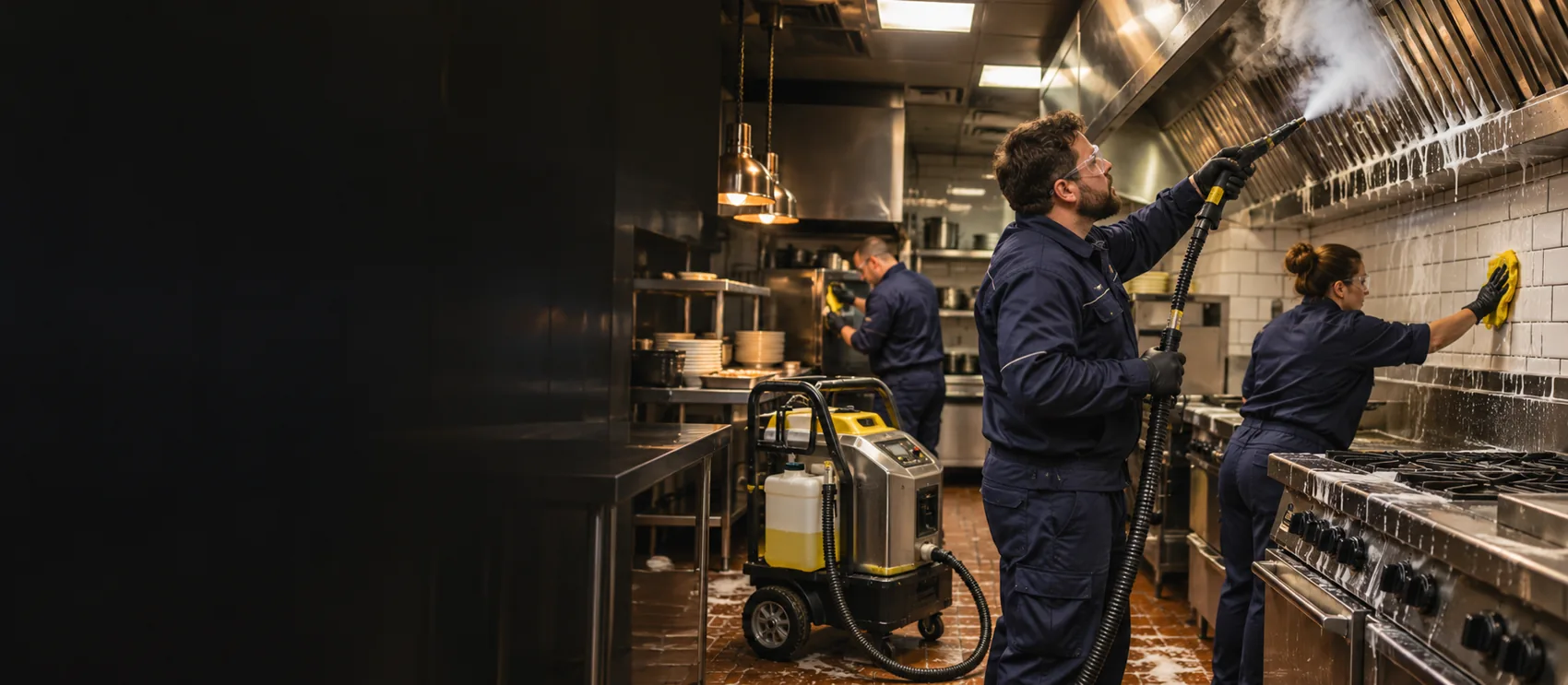
Planned degreasing and deep cleaning for working kitchens, equipment and difficult surfaces.
Request a quotePlanning a kitchen deep clean around service
For a restaurant, school kitchen or hotel in Glasgow, the cleaning window runs from the last service to the moment staff need to prepare food again. Start with that timetable and a list of equipment. A quotation should say which canopy surfaces, appliance exteriors, workstations, wall junctions and floor edges are included. Mention cold stores, fixed equipment and any extraction servicing already booked so that the kitchen manager can coordinate access with the right contractors.
Separate daily hygiene from deep cleaning
A deep clean supports the operator’s hygiene system but does not replace daily cleaning, temperature controls or management checks. A kitchen can look tidy from the dining room while grease remains behind a range, along a wall floor junction or beneath a storage unit. We focus on areas that routine staff may not be able to reach during service. The manager remains responsible for the food operation and can identify critical surfaces and exclusion zones. A clear task list distinguishes the operator’s regular duties from our scheduled intervention. That makes the work measurable and avoids a vague promise to clean everything, which could conceal equipment that requires a separate engineer.
Planning around food, staff and trading
Food and movable utensils should be removed or protected before specialist cleaning starts. We agree who will empty shelves, isolate equipment and authorise access to fixed appliances. An evening or closed day may be preferable for a busy restaurant in Finnieston or a café in Shawlands, while a production kitchen may need phased work to preserve operations. Staff should know when a zone is closed and when it may be reopened. We discuss deliveries, waste collection, water, electricity and ventilation so the team can work without crossing clean food storage. The schedule also needs enough time for rinsing, drying and inspection, rather than ending at the moment the visible grease disappears.
Restaurants and hospitality across Glasgow
Kitchens in Glasgow city centre often have narrow rear access, shared service lanes and tight turnaround between evening service and breakfast preparation. West End cafés and Southside restaurants may have different layouts but similar pressure to reopen on time. We discuss a realistic window for the areas that matter most, including the time needed for staff to move stock and check equipment. A phased clean may be preferable to a single hurried visit. We also work from an agreed checklist so the manager can see what was completed in the available time. The quote should distinguish a one-off restoration task from a regular maintenance programme.
Institutional and workplace catering
Schools, offices, care settings and community facilities have their own access controls and safeguarding or security arrangements. The person commissioning the clean can identify permitted hours, escort rules and the surfaces that must remain operational. We do not treat these kitchens as if every organisation uses the same equipment or menu. A large preparation area may require zones so clean and dirty work do not overlap. The operator confirms any restrictions on products and the process for returning a room to use. In East Dunbartonshire, Renfrewshire and Glasgow alike, planning with the facilities team is as important as the physical removal of grease.
Canopies, cookers and food preparation areas
A canopy collects grease and airborne residue above cooking equipment. Its exterior, accessible baffles and nearby surfaces may be included in a kitchen deep clean, but internal ductwork and fan systems are a separate technical scope that must be expressly specified. We identify what can be reached and whether filters can be removed safely by authorised staff. Power and gas isolation may be needed before work near appliances. A close inspection may show deposits or corrosion that cleaning cannot repair. The handover should say whether the extract was surface cleaned, whether filters were treated and whether any internal system was inspected. This prevents the word extraction from being used to imply more work than was actually done.
Ovens, ranges and fixed cooking equipment
Ovens and ranges may need a planned cool down before a deep clean. We ask the operator which components can be removed and whether an engineer is required for disconnection or reassembly. Burnt carbon, grease and food residues can be layered, so the result depends on access, age and the condition of the finish. We do not claim to repair a faulty thermostat, damaged seal or defective burner through cleaning. Controls and labels should remain legible, and the equipment must be checked by the responsible operator before use. An itemised scope makes it clear whether interiors, exterior panels, wheels, trays and the area beneath a unit are included.
Cold rooms, stores and preparation spaces
Cold storage and preparation rooms require particular care because food may be present and some equipment cannot simply be switched off. We agree which rooms are in scope, who moves stock and how temperature sensitive items will be protected. Shelving, handles, floor edges and wall junctions may need attention, but seals or damaged panels may require repair. A separate safe product choice and drying plan may be needed in chilled areas. We do not open sealed plant components or interfere with refrigeration systems. The operator confirms when each room is ready to resume its intended use. Clear sequencing reduces the chance of moving dirt from a heavily soiled cook line into a clean store.
Degreasing the kitchen and managing wash water
Grease can soften under heat or a suitable product, but a strong cleaner is not automatically safe for every surface. Stainless steel, aluminium, painted panels, seals, grout and natural stone have different tolerances. We check the material and use a trial where staining or an older coating makes the outcome uncertain. Product contact time, agitation and thorough rinsing matter as much as concentration. Scraping a delicate finish to achieve a fast bright appearance may cause lasting damage. We also manage the liquid produced so that it does not flow into an electrical fitting or leave a slippery floor. The method is chosen for the actual kitchen rather than copied from another premises.
Floors, joints and drainage in working kitchens
Kitchen floors encounter grease, water, food debris and repeated foot traffic. A textured safety floor may retain residue in the profile, while damaged grout or an open joint can hold moisture beyond the reach of a surface clean. We assess the finish, choose suitable agitation and ensure rinse water is recovered or directed appropriately. Drains and traps need a clearly defined scope because a blocked line may require a drainage specialist. We avoid leaving a floor wet and slippery when staff return. A visual improvement is useful, but the operator should also inspect whether damaged tiles, cracked coving or failed seals require repair. Cleaning cannot make an unsound surface hygienically maintainable by itself.
Walls, ceilings and high level deposits
High level grease and dust can settle on ceiling panels, light fittings, pipework and shelf tops. We plan safe access and avoid exposing food preparation areas below to falling material. Painted surfaces may be softened by harsh products; older ceiling tiles may be unsuitable for wet treatment. The team distinguishes washable surfaces from materials that need replacement or a specialist inspection. We work from higher areas down when this is practical, then complete the equipment and floor sequence. Light fittings and electrical enclosures must be treated within their safe limits. A kitchen manager can use the handover to add difficult high level areas to a future maintenance plan.
Waste, water and chemical management
A commercial clean can produce grease, used cloths, packaging and rinse water. We plan where these materials can be collected and how they will leave the premises without crossing a prepared food zone. Products are used according to their instructions and the surface being treated, with appropriate ventilation and protective measures. The manager should identify any drainage restriction or local trade effluent arrangements that affect the work. We avoid making assumptions about a floor drain simply because one is visible. A brief pre-start conversation about storage, isolation points and waste routes can prevent disruption that would otherwise occur in the middle of a night shift.
How the cleaning sequence is controlled
Before work starts, the manager confirms the area is available, movable food is protected and the required isolation has been carried out. The team documents the initial condition, works through high and low zones in a planned order, and checks for product residues before moving on. Grease is removed from agreed components, rinse water managed and floors completed after overhead work. We then inspect the task list with the responsible person, identify any inaccessible or damaged area, and leave the space ready for the operator’s own checks. The operator is responsible for returning appliances to service and confirming that production can resume. A methodical handover is more useful than a quick photograph of one bright canopy.
Recording the work and following up defects
A handover the next kitchen shift can use
At handover, the duty manager should be able to point to each item on the job sheet and see what was done. For a canopy above a range, the sheet can distinguish the visible canopy and removable filters from any internal ductwork outside the agreed scope. Record any fitting the team could not reach, the reason and who will arrange the follow-up. If a cooker or preparation bench has been moved, tell the incoming shift where it now stands and whether an engineer still needs to attend. Keep that record with the kitchen’s existing cleaning schedule so the next manager can act on it.
A newly fitted kitchen can need an after builders clean before the operational deep clean starts. If there has been a fire, describe its extent when asking about fire and smoke damage cleaning so the scope accounts for residues beyond the cooking line.
Keeping the work useful after the visit
A single intensive clean has more value when the operator knows which areas build grease most quickly and why. The handover can identify a filter that needs a shorter maintenance interval, a floor junction that traps residue or a piece of equipment whose position prevents routine access. Managers can then revise their own schedules and arrange a repair where necessary. We avoid pretending that the cleaning team can set a universal frequency for every kitchen. Cooking volume, menu, ventilation, staff practice and building condition vary. The next deep clean should follow the premises’ observed condition and the operator’s own controls, with the difficult areas recorded for comparison.
When repair or an engineer is needed
A deep clean cannot mend a broken extraction fan, leaking gas connection, damaged electrical fitting or failed refrigeration seal. We stop work around an unexpected hazard and ask the operator to arrange a competent trade. Loose tiles, open joints and persistent leaks may prevent a surface from being kept clean after our visit. We can record these visible conditions without claiming to certify the building or appliance. Where a piece of equipment must be disconnected to reach behind it, only an authorised person should do that work. Clear boundaries protect staff and give the manager a realistic plan for what should happen before or after cleaning.
Quoting for commercial kitchens across Glasgow
The size of the kitchen is only one factor. The amount of grease, access behind fixed equipment, need for a platform, overnight work, dismantling authorised by the operator and waste handling all affect time. An initial inspection or detailed photographs help us separate a routine refresh from heavy restoration. A quote should list the exact appliances and surfaces, approximate working window and exclusions. If the operator wants an internal extract duct clean, that must be assessed and priced as a distinct service. We explain any condition that may limit the final appearance, such as damaged stainless steel or ingrained discolouration. Unexpected work is discussed before the scope changes.
Coverage and first contact
Nova Clean discusses commercial kitchen cleaning in Glasgow, Paisley, Bearsden, Clydebank, Newton Mearns, Renfrew, Greenock and surrounding parts of Greater Glasgow. Tell us whether the premises are a restaurant, hotel, school, workplace kitchen or production facility, and identify your preferred downtime. A short equipment list, safe photographs and the areas that routine staff cannot reach help us scope the task. Call 0845 52 805 20 or email